
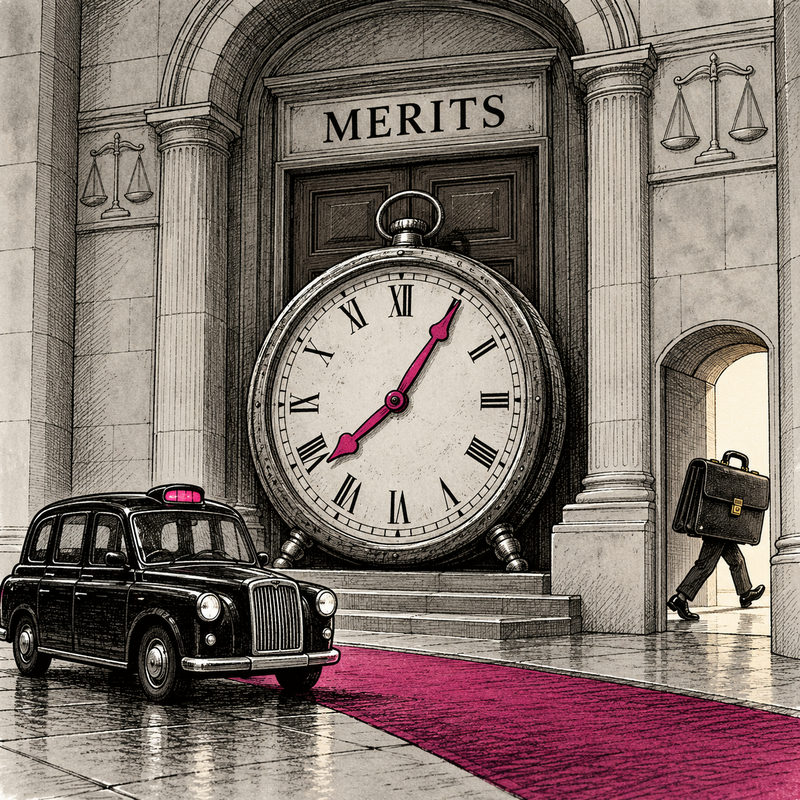
A case being thrown out is an excellent phrase for the winner. It has a pleasing sound of rubbish reaching the bin. It does not, by itself, tell you what was in the case.
BBC London's report on Uber's victory supplies the important distinction: the High Court dismissed the claims because they had been brought too late, without considering whether the allegations were true. That second clause is less portable than victory. It is also the part that keeps the story accurate.
Thousands of London black cab drivers and two former private-hire firms alleged that Uber gave Transport for London misleading information when it obtained its operating licence in 2012. Uber denied the allegations. The lawsuits were filed in 2024. The court accepted the company's argument that the claims fell outside the six-year time limit, finding that the alleged deception could have been discovered before 2018.
The clock won the argument before the argument about conduct began. This is a legitimate distinction in law and an extremely inconvenient distinction for anyone hoping to reduce the outcome to a triumphant sentence.
BBC London, citing Reuters for the figures, reports nearly £200 million sought by roughly 13,000 drivers and another £140 million sought for the two companies. Those are claimed damages, not losses the court established. The numbers did not become imaginary when the cases were dismissed. Nor did they become proven because somebody put them in a lawsuit. A headline can survive holding both facts. It may need to loosen its tie.
Uber said it was pleased the claims were thrown out at the earliest opportunity. Fair enough. Businesses may celebrate winning cases. Readers may preserve the reason they won. The earliest opportunity in this instance arrived through the calendar, which is different from a detailed judicial endorsement of the company's account.
The distinction has a public value beyond this dispute. Powerful companies can win because the facts favor them, because the law favors them, or because the procedure prevents a merits decision. Those outcomes can all produce relief for the company. They cannot all supply the same answer to the public's question about what happened.
We have examined Uber's argument over the cost of treating passengers better. This is a separate case and a separate claim. And the way legal procedures shape workers' opportunities to complain is a reminder that the route to a hearing often matters as much as the words inside the complaint.
The claimants' representative said it was considering options. That does not undo the ruling. It simply means the response to it is not yet settled. For now, Uber has a real legal victory, and the allegations remain untested in this decision. The careful sentence is longer than the celebratory one. Conveniently, a company that has just saved itself a trial should have a little time to read it.
Comments
Have something to say? Give this story a heckle.
Comment Rules
Argue the point. Add a joke. No threats, harassment, hate speech, spam, private personal information or unsupported accusations. First-time comments and comments with links are moderated. Full Comment Rules
Loading comments…
Questions or deletion requests? Contact Us. We retain comments and moderation records until removed. Only hashed email identifiers are stored for comment accounts.