
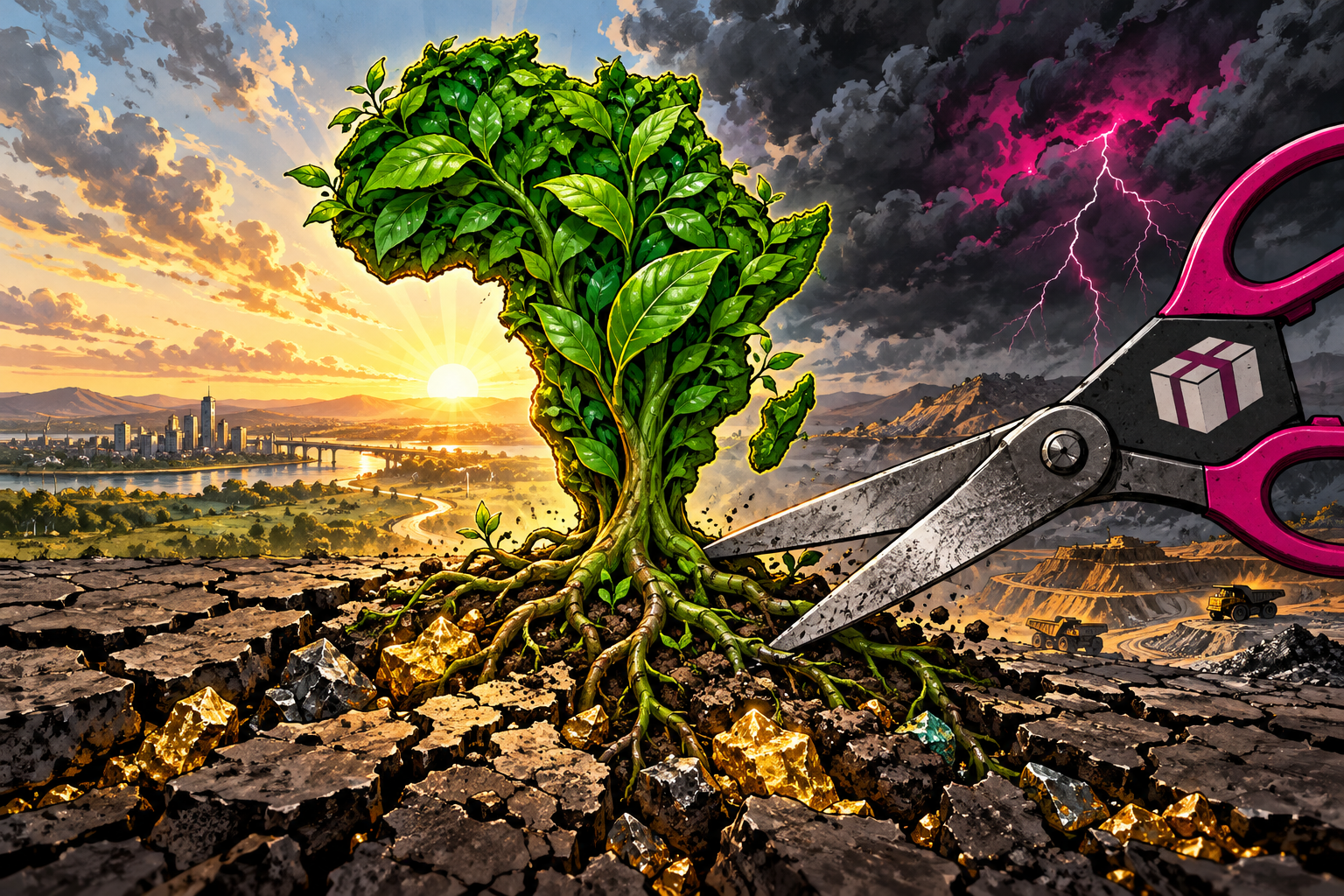
Africa’s economies are showing resilience, which is economist language for "the storm hit, the roof stayed on, and now everyone would like to cancel the insurance." The IMF upgraded its regional growth outlook this week. It also warned that shrinking aid, rising inflation and limited fiscal room leave many countries exposed to the next shock. Naturally, the optimistic number will get the headline while the warning label is sent to live under the seat cushion.
The Associated Press reported Thursday that the IMF now expects regional growth of 4.5% in 2026 and 5% in 2027. Reuters separately reported that the 2026 forecast was raised from 4.3% in April, reflecting domestic reforms and adjustments in global supply. That is real progress, and African governments deserve credit for policy choices that helped their economies absorb an energy crisis they did not create.
But the same briefings contained the inconvenient half of the sentence. AP reported that development assistance fell sharply last year and is forecast to decline another 12% this year. Reuters said the IMF expects median inflation in sub-Saharan Africa to rise from 3.4% in 2025 to 4.3% in 2026 and 5% in 2027. The Fund also warned that another energy disruption, market panic or climate shock could erase part of the gain.
Resilience Is Not Free Money
We should retire the habit of treating resilience as evidence that support was unnecessary. A bridge that survives a flood did not prove engineering was a waste. A health system that contains an outbreak did not prove aid could be cut. Resilience is built from institutions, workers, public investment and, yes, external financing. Removing those supports after a good forecast is how donors turn endurance into a punishment.
The IMF said in June that early estimates pointed to bilateral aid cuts to sub-Saharan Africa of about 26% in 2025. It noted that low-income and fragile countries often rely on aid equal to 6% of gross domestic product or more. Those flows support health, education, emergency response and basic state capacity. They are not all perfect, and donors should demand transparency and results. But a sudden withdrawal does not magically produce self-reliance. It produces holes in budgets that still contain human beings.
Meanwhile, mineral-rich countries face a familiar promise: global demand for gold, cobalt, copper and iron ore will finance transformation. It can — if countries capture fair revenue, process more material locally, protect workers and communities and invest the proceeds beyond the mine gate. If not, the boom becomes another export corridor carrying wealth outward at truck speed.
Growth Should Reach The Ground
A liberal development agenda should meet African governments as partners, not as props in a contest among Washington, Beijing and Moscow. That means predictable aid for essential services, fair debt restructuring, climate finance, local value chains, regional trade and support for tax systems that can fund public goods without crushing low-income households.
It also means listening to African finance ministers who are asking how mineral wealth can create jobs and diversified economies rather than another cycle of extraction. Growth matters. Who owns it matters more.
The IMF’s upgrade is good news, not a permission slip for wealthy countries to leave. If the global economy keeps handing African nations energy shocks, expensive debt and climate risks, congratulating them for resilience while cutting assistance is not partnership. It is standing outside in the rain, admiring the roof and taking back the ladder.