
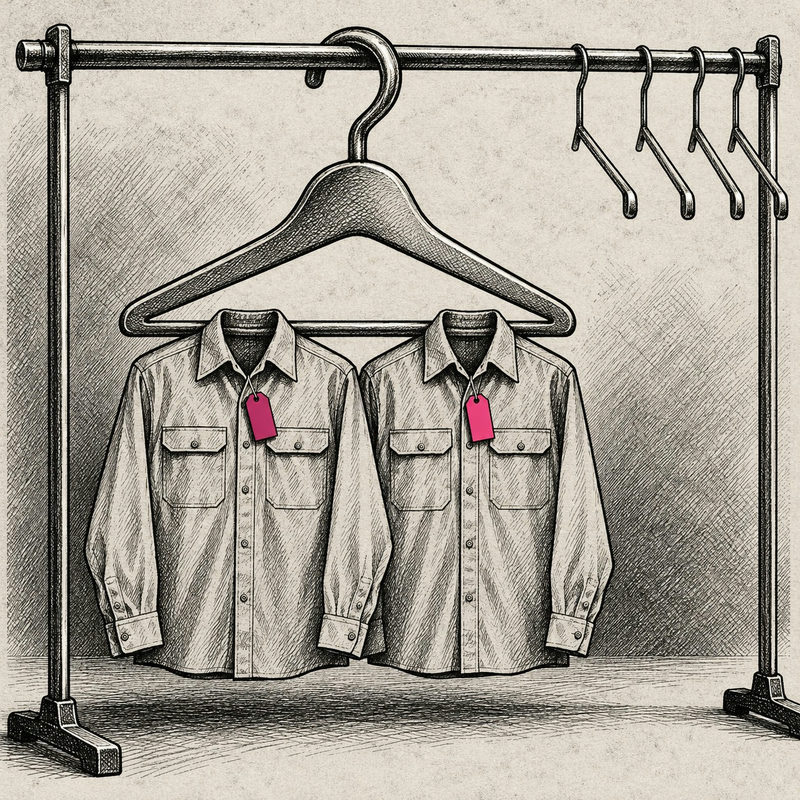
Cintas would like to compete more effectively by purchasing a company it competes with. This is a familiar business strategy, although customers might reasonably wonder when the competition part returns from lunch.
Reuters reports, citing Semafor's sources, that the Federal Trade Commission has indicated it intends to sue to block Cintas's proposed $5.5 billion acquisition of UniFirst. The commission has not yet voted on whether to sue. This is a reported intention, not a filed lawsuit or a court decision.
FTC staff have privately expressed concern about the combined companies' market share, according to that reporting. No specific share is supplied, and neither the companies nor the agency immediately responded to Reuters's requests for comment.
The transaction would combine two of North America's largest workwear and facility-services providers. Cintas agreed to the cash-and-stock deal in March after making at least three formal approaches since 2022. Persistence is admirable. In antitrust, however, repeatedly asking to buy the other large supplier does not count as developing a third option.
Cintas's rationale includes expanding its reach and cutting costs by combining delivery routes, plants and supply chains, helping it compete with rivals. Those can be real efficiencies. A truck making a better route is not inherently a scandal, and savings do not become imaginary because they appear in a merger presentation.
Make powerful people uncomfortable.
Subscribe to Democrawonk.
The separate question is who benefits from them, and what choices remain for customers. “We can run this more cheaply” is not the same promise as “you will pay less.” The report does not establish future prices, service changes or an inevitable harm. Those are matters an actual competition review would need to examine.
This is why an antitrust agency has a job beyond admiring a diagram with fewer warehouses on it. From the merging companies' perspective, duplicated operations look inefficient. From a customer's perspective, a second supplier can be a rather useful duplication.
As the fight over the blocked supermarket merger showed, a transaction's benefits to the companies and its benefits to their customers are separate propositions. Workwear is a different market, but the distinction still needs examining.
The uniforms are supposed to be interchangeable. The firms supplying them do not have to be.
If commissioners authorize a challenge, the government will have to make its case and the companies will have an opportunity to defend the transaction. Reported staff concerns are not a substitute for that process. Neither is the comforting claim that a larger business will be better at competing.
Sometimes it will. Sometimes the business will simply have one fewer major competitor to worry about. The distinction is worth sorting out before every sales representative starts arriving in the same corporate uniform.
Comments
Have something to say? Give this story a heckle.
Comment Rules
Argue the point. Add a joke. No threats, harassment, hate speech, spam, private personal information or unsupported accusations. First-time comments and comments with links are moderated. Full Comment Rules
Loading comments…
Questions or deletion requests? Contact Us. We retain comments and moderation records until removed. Only hashed email identifiers are stored for comment accounts.