
Opinion & Satire
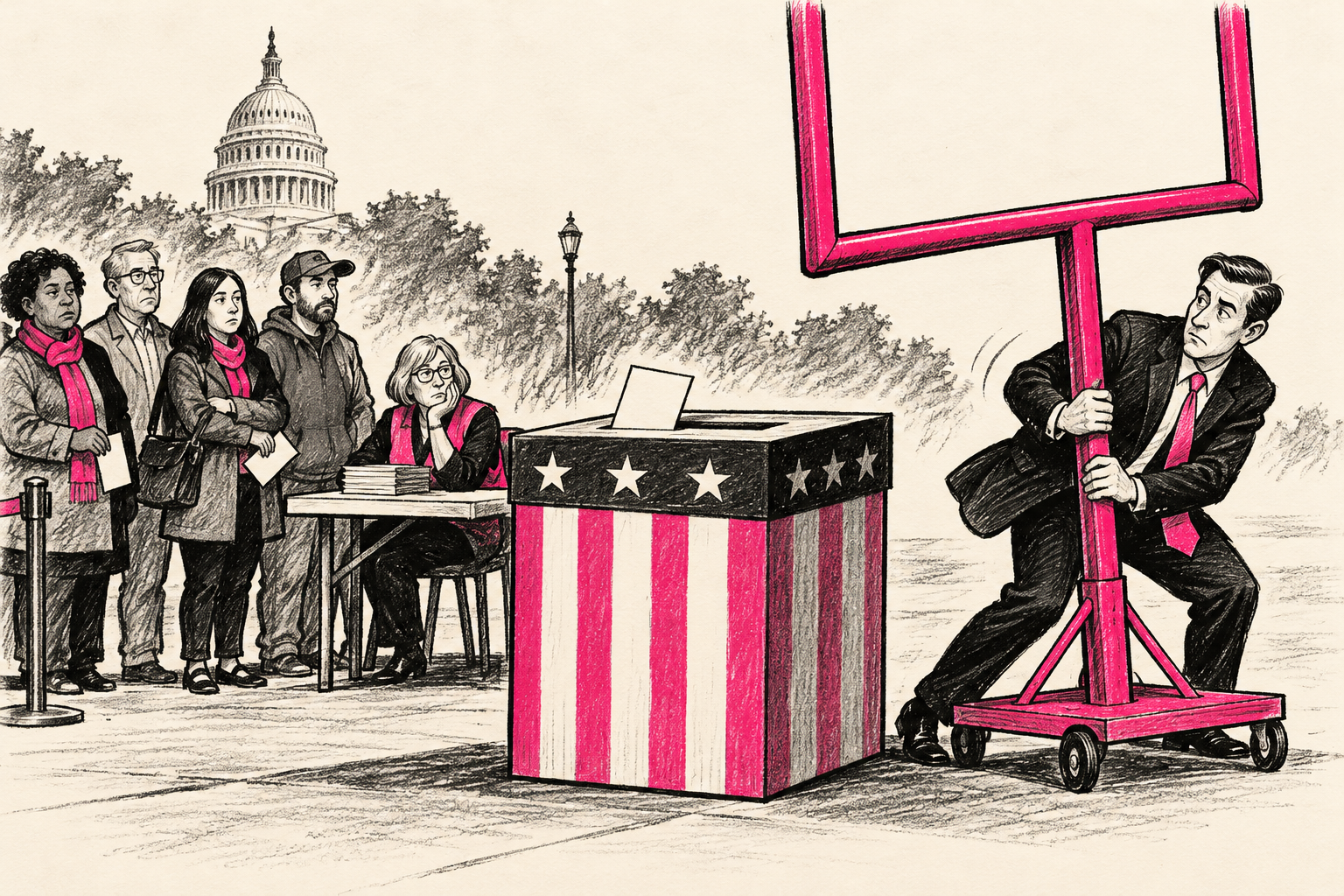
Running for the Senate involves asking the public to trust you with complicated decisions. Apparently, one of the harder practice questions is whether the public gets to choose somebody else.
Reuters reported October 15 that 14 of 26 campaigns surveyed across 13 competitive Senate contests gave unconditional commitments to accept the outcome: nine Democrats, one independent and four Republicans. Other responses included qualifications, deflections and no answer. The survey is a record of those campaigns' responses, not a finding that every nonrespondent plans to reject a loss.
That distinction matters. A missed email is not a coup plot. An evasive answer is still an answer worth following up.
The standard should be both clear and fair: accept the lawful outcome after the counting and applicable review processes, whether it delivers the victory your campaign ordered or the very different product the voters selected.
There Is A Process For That
The Election Assistance Commission explains that election-night totals are unofficial. Canvassing checks the accounting, certification establishes official results, and audits or recounts can be part of the process under differing state rules.
So asking candidates to respect the outcome does not mean demanding instant surrender when a television graphic changes color.
A close contest can deserve a recount. A documented problem can deserve investigation. An eligible voter's ballot can deserve a careful review rather than a hurried declaration that everybody should move along.
The point is to resolve those questions through evidence and established procedures—not through an emotional satisfaction survey administered by the losing candidate.
Democracy does not require you to enjoy losing. It requires that disappointment not become an alternative method of tabulating votes.
This is a useful distinction because a principled commitment can accommodate legitimate legal challenges without reserving a permanent escape hatch. The candidate can promise to respect the process, bring specific evidence through the appropriate channels and accept the result when that process is complete.
If an office-seeker cannot explain that in ordinary language, voters are entitled to wonder why the explanation needs so many emergency exits.
Confidence Is Not A Substitute For Consent
Predicting victory is normal campaign behavior. It does not answer what happens after a defeat.
A restaurant can confidently expect a good review. It still needs a policy for what happens when the customer dislikes the soup. Politics has somehow produced a culture in which asking about the second possibility is treated as an outrageous attack on the chef.
Voters should ask the question before Election Day, while there is still no result for a candidate to rationalize away. The commitment is more meaningful when it applies to an unknown outcome.
The liberal case here cannot be selective. Democrats should give straightforward answers too. An allegation of interference needs evidence and a remedy; it should not become a prewritten excuse for rejecting an unwelcome count.
Nor should Republicans who commit to respecting the outcome be erased from the story because their answers complicate an easy partisan punchline. Reuters found four such commitments. Standards become stronger when we recognize compliance as well as evasions.
The public should expect candidates to defend eligible voters, cooperate with legitimate scrutiny and avoid manufacturing certainty from rumors. Those obligations fit together. You do not protect an election by insisting it can be legitimate only when your side wins.
Nobody is being asked to endorse every decision an election administrator makes. They are being asked to recognize that a campaign is a request for public consent, not an advance reservation on a government office.
If the answer from voters is no, the job is to accept the completed lawful result, learn something and try another election.
The concession button is not an obscure optional feature. It came installed with the democracy.