
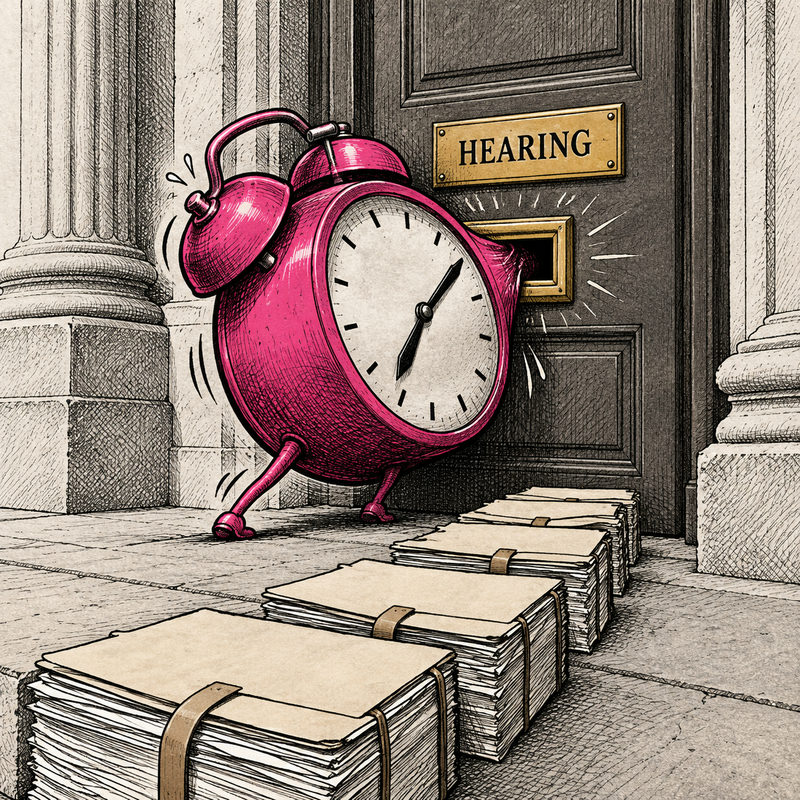
The Justice Department would like an emergency lane through California's election process. At Sunday's appellate hearing, the judges wanted to know who had authorized the lane.
AP reports that the administration sought to set aside ballots linked to roughly 20,000 suspected noncitizens. Two judges questioned its authority and the appeal's timing, before the lower court had ruled. A third suggested an injunction could provide clarity. These were arguments, not a final decision; the citizenship allegations remain disputed.
Urgency can be a reason to hear a case quickly. It is not a portable jurisdiction kit. You cannot inflate it in the courthouse lobby and discover that you now possess all the powers missing from your filing.
That is the useful development here, beyond the demand letters we covered earlier: the administration's timetable has encountered questions about the source and limits of its authority. A deadline is a management tool. A court order is an exercise of power over other people. The distance between them is not supposed to disappear because someone is tapping a watch.
Make powerful people uncomfortable.
Subscribe to Democrawonk.
There is an obvious public interest in ensuring that eligible votes count and ineligible votes do not. There is also an obvious danger in treating a disputed list as an instruction to withhold ballots. Calling the second concern inconvenient does not answer the first one.
The government can present evidence. It can identify the law it believes supports its request. It can explain why the ordinary procedural sequence cannot protect the interest it describes. Those are arguments worth hearing. They are also work, which may explain the attraction of arriving with a flashing light instead.
An emergency label should make officials more precise about what they want, from whom and under which authority. It should not make the questions rude.
The siren can get everyone's attention. It still cannot sign the order.
Comments
Have something to say? Give this story a heckle.
Comment Rules
Argue the point. Add a joke. No threats, harassment, hate speech, spam, private personal information or unsupported accusations. First-time comments and comments with links are moderated. Full Comment Rules
Loading comments…
Questions or deletion requests? Contact Us. We retain comments and moderation records until removed. Only hashed email identifiers are stored for comment accounts.