
The Corporate Transparency Act has run into a difficult implementation question: what if the corporations did not have to be transparent?
A coalition of states and the District of Columbia sued the Trump administration Tuesday over its rollback of beneficial-ownership reporting requirements, Reuters reports. The challenge targets an August Treasury rule exempting U.S. companies and individuals from reporting ownership information to the department's financial-crimes unit.
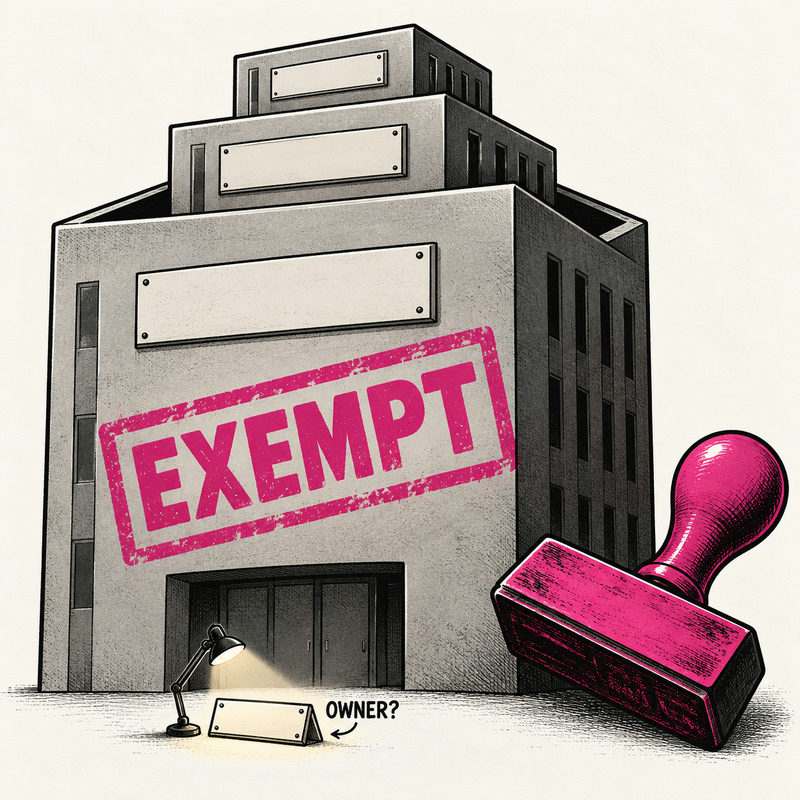
The plaintiffs say the exemption removes more than 99.9 percent of the companies originally covered. That is their allegation, not a court's finding. But it does make the dispute unusually easy to visualize: a transparency program with almost everybody directed toward the exit.
The underlying 2021 law was intended to help combat illicit finance by identifying the people behind companies. That does not mean every private company is criminal, or that a business owner who dislikes paperwork is hiding a trafficking empire. Reporting systems impose costs on legitimate businesses too.
Treasury Secretary Scott Bessent defended the rollback when it was issued as removing a burden from millions of law-abiding owners without compromising national security. That is the administration's case. The states argue that the executive branch has gone beyond administering a statute and effectively undone it.
Make powerful people uncomfortable.
Subscribe to Democrawonk.
These are different questions, and the distinction is doing quite a lot of work. Whether a reporting requirement is inconvenient is not the same as whether an agency has authority to exempt almost everyone from the law that created it.
Otherwise, Congress could pass a fire-code inspection requirement and the implementing agency could demonstrate exceptional customer service by exempting buildings.
The lawsuit, filed in federal court in Oregon, asks for the rule to be overturned. No judgment on that request is reported. New York Attorney General Letitia James says the rollback lets the real owners of domestic and foreign shell companies remain anonymous. Treasury did not respond to Reuters's request for comment on the new case.
The policy stakes concern who can trace control when money moves through corporate structures. A company name identifies a legal entity. It does not necessarily tell an investigator who ultimately owns it. That distinction is precisely why ownership information can matter without implying that all companies are suspicious.
There is room to argue about thresholds, administration, burdens and safeguards. There should be considerably less room to advertise the survival of a statutory program while debating whether its main population has been excused from participating.
The law's name still promises transparency. The litigation will test how much can disappear underneath it.
Comments
Have something to say? Give this story a heckle.
Comment Rules
Argue the point. Add a joke. No threats, harassment, hate speech, spam, private personal information or unsupported accusations. First-time comments and comments with links are moderated. Full Comment Rules
Loading comments…
Questions or deletion requests? Contact Us. We retain comments and moderation records until removed. Only hashed email identifiers are stored for comment accounts.